
Designing Reading Nooks and Window Seats to Carve Out Quiet
There's something about a well-considered reading nook that shifts the entire atmosphere of a home. The opportunity is to design a space for a deliberate pause or stillness. The best reading nook designs emerge from understanding where people naturally gravitate when they want to withdraw, and from recognising the in-between spaces that often go unnoticed. A deep window reveal, the turn of a staircase landing, or an alcove that catches morning sun.
Creating a space that brings together light, comfort, and a sense of privacy and quiet is at the heart of a well-designed and used reading nook or window seat.
Read on to learn more about the design elements that we use in our studio that you can use to create the ultimate quiet place for rest, reading and relaxation in your home.
Window Seats That Invite
A built-in window seat operates at the intersection of architecture and interior design. It's both structural and soft, permanent yet adaptable. Unlike freestanding furniture that can be rearranged or replaced, a built-in window seat bench becomes part of the building's language.
Incorporating a built-in window seat should invite sitting rather than be purely decorative. Ensuring the practicalities of its purpose is essential. Does the window reveal have sufficient depth? Will the seat height align with the sill in a way that feels resolved? Can you integrate storage without compromising comfort?
These practical considerations matter as much as aesthetic ones, because a window seat that doesn't function well won't be used – regardless of how beautiful it appears.
Framing the View
Sometimes a reading nook design succeeds not because of what it contains, but because of what it reveals. The relationship between interior retreat and exterior outlook can transform a simple window seat into something that invites lingering.
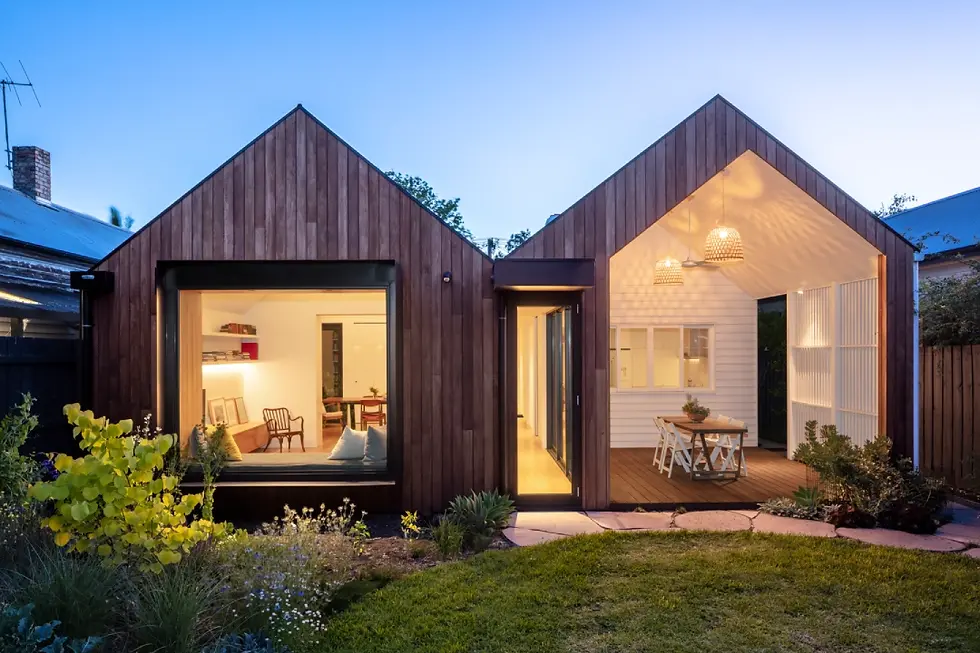
In the Swedish Summer House, Hindley & Co positioned a window seat to deliberately frame views of the garden. Here, the window seat functions as a threshold to the landscape beyond. You're sheltered and comfortable, held by the architecture, yet directly connected to the movement of trees, the changing weather, and the shifting qualities of light throughout the day.

The proportions of the window for reading nooks and window seats are vital. Too small and the view feels mean. Too large, and the sense of enclosure and retreat is lost. The Swedish Summer House achieves this careful balance, generous glazing draws the eye outward, while the seat itself provides just enough embrace to make you want to stay.
This approach works particularly well in Australian contexts, where the boundary between inside and outside plays a significant part in our lifestyle. A reading nook with a considered view doesn't just provide a place to read – it creates a vantage point for observing the small dramas of the natural world. Birds at a feeder. Afternoon shadows lengthening across the grass. The first drops of rain on glass. Kids or dogs playing. These moments of observation and contemplation, when you look up from the page, enrich the reading experience.
Natural and Considered Light
The relationship between reading nook design ideas and lighting is foundational yet frequently underestimated. Natural light is ideal but rarely sufficient on its own. As the afternoon shifts to evening, you'll need supplementary lighting that doesn't flatten the space or create glare.
Avoid overhead downlights directly above a reading nook as they cast your head in shadow, making reading difficult. Instead, consider wall-mounted reading lights with adjustable arms, positioned on either side of the seat. Alternatively, a floor lamp with a well-designed shade that directs light downward and outward without harsh edges can also work if wall mounting and internal wiring aren’t viable.
Dimmers are non-negotiable. The ability to modulate light levels as daylight fades allows the space to transition gracefully from a daytime reading zone to an evening retreat.
Incorporating Storage
Incorporating storage into your reading nook design often comes down to practical considerations of need, space, and opportunity. A built-in window seat with drawers or shelving makes sense when books and other items need a home - provided the architecture can accommodate shelving without crowding the space.
In Hindley's ArchDeco project, a window seat with integrated storage demonstrates how function can support a contemplative space. Here, the window seat becomes an inviting place to step away from work activities; while beneath the cushioned seat, discreet compartments that hold blankets, books and other items ensure the space is uncluttered and inviting.

Creating Quiet in Small Houses
The question of how to create a quiet retreat in a small house requires creative pragmatism. You're unlikely to have a spare room to dedicate to reading, so you're looking for moments within existing spaces. The turn of a stair landing with a window becomes a place to pause. A bedroom corner with good light gets a chair and a small side table.
The key is to create psychological separation without requiring physical walls. This can be achieved through subtle level changes, such as a slightly raised platform to create definition. Materiality is also important. Designers often rely on tricks such as placing a rug to mark the boundary of the nook. Lighting is also an effective design element to consider. For example, a pendant or wall sconce can be used to establish the zone as distinct from the surrounding space.
Acoustic separation matters too. A reading nook positioned near high-traffic areas needs something to buffer sound. A partial wall, a tall bookcase, or even a heavy curtain that can be drawn for additional privacy. These elements needn't be elaborate.
The most successful small-space reading nooks are those that do one thing well rather than attempting to serve multiple functions. Let it be a place for reading and the kind of quiet contemplation that accompanies it. This specificity of purpose is what makes it feel like a retreat rather than just another multi-purpose zone.

The Small Details That Make the Difference
Cushion comfort: Reading nook interior design can be undermined by details you might not immediately notice, but will definitely feel. The thickness of a cushion matters. If it’s too thin, it will be uncomfortable after fifteen minutes; too thick, and it looks disproportionate and feels like sitting on a couch rather than a built-in seat.
Power: Having a discreet outlet nearby means you can charge devices or use a reading light without trailing cords across the space. These should be integrated thoughtfully. We recommend recessing power-points into joinery or tucking them into corners where they're accessible but not visually prominent.
Temperature control: Temperature regulation is often overlooked. A window seat beside single-glazed windows can be uncomfortably cold in winter and too hot in summer. Address this through appropriate glazing and consider how to maintain year-round thermal comfort. A beautiful-looking reading nook that's unusable for half the year isn't a successful design outcome.
Finding Your Own Quiet
Designing a reading nook is ultimately an exercise in understanding what helps you settle in. This is personal and specific. Some people need visual enclosure – high backs, surrounding shelves, a sense of being held by the space. Others want openness – views, light, a feeling of expansion rather than containment.
Start by observing where you naturally gravitate when you want to read or simply be still. What are the qualities of light? What are you looking at? What's the relationship between your body and the surface you're sitting on? These observations tell you more than any collection of reading nook design ideas because they're informed by your personal and actual patterns of use.
The next step is to think about how to formalise your observations into something more intentional. It doesn’t need to be elaborate – sometimes the most successful reading nooks are the most simple. A bench with a good cushion and good light might be all you need. The key is for every element to support the act of settling in with a book and give you a calm space to relax and unwind.

The houses we design at Hindley & Co are ultimately about supporting the rhythms and rituals of daily life. A reading nook is a small yet meaningful gesture toward creating space for quiet contemplation, which you can incorporate into your day.
When we integrate window seats or reading corners into our projects, we consider how that space will be inhabited over the years, how it might become someone's favourite place to begin their day or end it, and how it contributes to the emotional experience of being at home.
These spaces don't announce themselves. They're not performative. They simply exist as generous, thoughtfully resolved moments where architecture and interior design converge to support something fundamental: the human need to sometimes step away from the noise and just be still.
Get in touch with Hindley & Co to explore your design project.


I consider the overview balanced in integrating multiple indicators. Interpretations remain cautious. Additional contextual insight on the topic may be found on the website . Platform-driven entertainment systems complete the analytical frame.