
Designing A Master Bedroom Wellness Sanctuary
The summer holidays fade, routines resume, and suddenly that hard-won calm and contentment starts to evaporate. What if your home could hold onto that quietness with the help of an intentionally designed sanctuary in your master bedroom?
A bedroom sanctuary isn't about adding more; it's about creating space that lets you exhale. A room that responds to your senses, connects you to the natural world, and supports the rituals that anchor your wellbeing, where the act of closing the door becomes a small, daily ritual of return.
So what makes a bedroom a wellness sanctuary? The answer lies in your personal wellness needs and routines, and in designing the space around them. It should provide the right cues for genuine rest, not just sleep, enabling the practices that support mental clarity and physical renewal.
Using Material and Biophilic Design
The materials in a bedroom sanctuary do more than look beautiful. They should be used to create a quiet atmosphere and link you to nature. This biophilic approach, weaving nature into the built environment, proves essential to genuine wellbeing. Natural stone keeps feet cool underfoot in summer. Timber brings organic warmth and subtle acoustic softening. Cork underlay absorbs sound while offering thermal comfort. Walls in warm whites or soft natural hues diffuse light softly, without glare.
Materials become part of the way you experience a space, such as when stone meets timber, shadow defines form, or a window frames the sky and foliage rather than an urban vista. These details combine into something soothing that helps to recalibrate your nervous system.
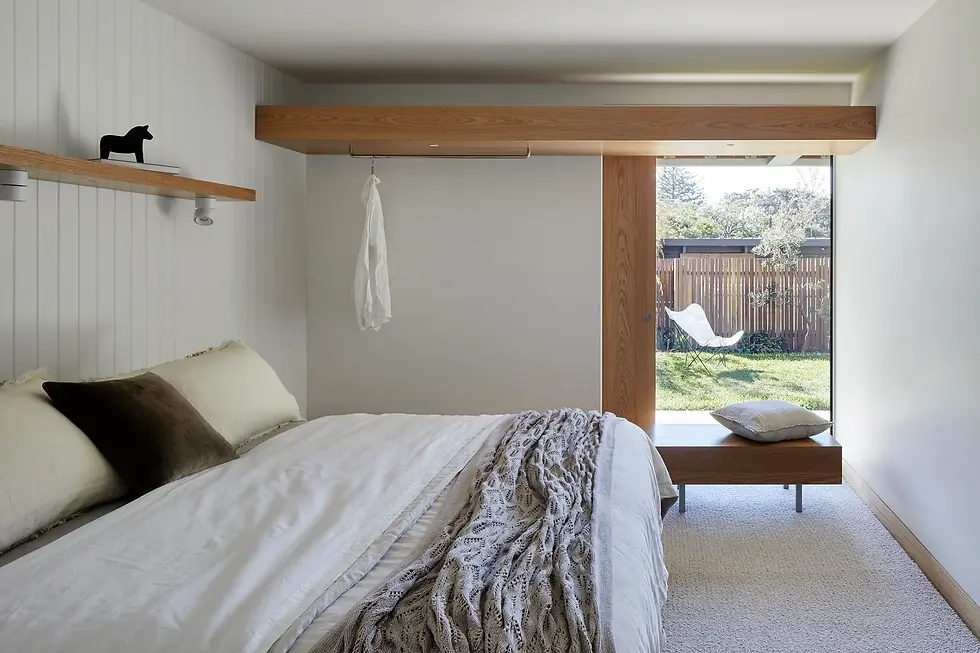
Biophilic design is about reconnecting you with nature within a built space. Think about the views you can include, the quality of light, the materials you can touch and feel, and how you can bring nature into your space.
Light, Air, and Acoustic Intelligence for Calm
Real retreat starts with how you enter your room. A bedroom retreat requires threshold moments that mark the shift from public to private. This might be a deeper doorway, a small vestibule, or simply a carefully considered layout that creates a psychological separation.
Natural Light Shapes Wellbeing Profoundly
Maximising daylight while controlling its quality defines the bedroom sanctuary, making it essential to think about the placement of your windows.
High windows bring in light while maintaining privacy
East-facing glass captures the morning light
Retrofitting translucent roller blinds or sheer linen curtains diffuses the intense afternoon sun.
The Lighting Design of Your Bedroom Retreat Is Equally Important
Aim to think beyond pure functionality to creating your desired mood, with light as one of the variables you can control to support your body's circadian sleep-wake cycle.
Start with warm-toned, dimmable overhead lighting you can adjust to support your evening wind-down routine.
Use bedside reading lights at the exact height that suits your preferred reading position.
Add a dimmable wall sconce to create a calming atmosphere in the evening.

Air Quality and Sound Control Also Shape Your Sanctuary as Much as Aesthetics
Windows positioned for cross-ventilation will let in fresh air and connect you to seasonal shifts.
If you’re in a city, you may also consider getting a high-quality air purifier to improve indoor air quality.
Consider using an essential oil diffuser to add scents such as lavender, chamomile, or bergamot, which can send signals that promote relaxation.
Sound and Acoustics Are Another Important Element to Consider When Designing Your Bedroom Sanctuary
Soft materials, such as timber, wool, linen and cork, will help to absorb noise.
If noise from the rest of your house or the street intrudes into your sanctuary, adding acoustic panels, heavy drapes, or double-glazed windows will help muffle or block it.
Some people find that gentle background sounds, such as a small tabletop fountain or subtle nature recordings, create a sonic layer that masks intrusive noise.
Functional Zones for Wellness
The best master bedroom retreat ideas include focused zones that support specific wellbeing practices, contributing to the space's visual calm.
The Sleep Zone
Ensuring the sleep zone is free of visual clutter will contribute to the ‘visual calming’ of the space. This is often achieved through purposefully designed built-in joinery that creates architectural calm while eliminating the mess of everyday living.
Functional elements, such as wardrobes or bedside tables, can be composed and integrated to create seamless lines, contributing to the calming look and feel you are seeking for the space.
Selecting natural fibres for bedding, such as linen, cotton, or wool, can evoke a sense of connection to nature and add tactile sensory layers to your sleep zone. As a result, your space is infused with feelings of calm and comfort. Natural fibres are also healthy, with wool in particular known for its unique heat-regulation and purification properties, making it a great choice for people with allergies.
The Reflection Corner
If you have the room for it, dedicating a small space for contemplation is one of the most commonly included elements in a wellness space. It doesn’t take much – just a comfortable armchair or plush floor cushion positioned near a window, with a low shelf holding or a side table for a journal, or room for a morning or evening tea ritual. That’s all that you need.

The Movement Area
Integrating gentle physical exercise into daily life is another aspect of wellness you can incorporate into your master bedroom retreat design. The area needn't be large – it just needs to be intentionally preserved and uncluttered, sufficient for a yoga mat and movement.
The Bathing Ritual
When space allows, the master bedroom sanctuary could flow organically into an ensuite. A deep-soaking tub for decompressing and relaxing can be made more impactful by including greenery or glimpses of the sky.
A shower with space to move and spray options that meet your individual preferences is a simple way to provide indulgence. For those with room, a compact sauna or steam alcove brings heat therapy and detoxification benefits to the space.
Cold therapy, such as a cold plunge or a dedicated cold shower after heat exposure, is another idea that fits with the idea of a sanctuary in your home. The hot-to-cold experience helps with circulation and mental clarity.
Ideas to Feed Your Senses
Creating a bedroom sanctuary starts with design choices that impact your sensory experience and mental state.
Colour as Mood Medicine
Soft, neutral, and earthy palettes, such as warm whites, beiges, muted sage greens, and dusty blues, evoke a sense of balance and tranquillity. These are classic colours that don't compete for attention, allowing your nervous system to settle. They also provide a background that highlights the beauty of natural materials.
Texture to Engage Your Senses
Layering textures creates tactile sensuality while also muting the space and providing thermal comfort. Linen curtains will soften hard surfaces, while a wool throw provides weight and warmth. The use of smooth stone surfaces can offer a pleasing contrast with timber's grain. These tactile variations create interest without being overly visually stimulating while inviting physical interaction with your environment.
The Combination of Water and Greenery
Research has shown that seeing or hearing water and greenery can have a positive effect on your state of mind. Incorporating these natural elements into your wellness sanctuary may be as simple as positioning your bed to give you views of a pool or water.
Even watching the water flowing into your bath or showerhead can become a mindfulness practice in itself.
Plants are often the obvious choice to introduce nature into your bedroom. Common plants that are not fussy yet deliver greenery with impact are easy to add to your room. Pots with fiddle leaf figs or trailing pothos support both air quality and a moment of pause in your everyday life.

The Editing Process
Creating a bedroom sanctuary isn't always about a dramatic renovation. Often, it's about removing what doesn't serve the room's central purpose, then intentionally layering in elements that support your specific wellbeing practices.
Start with Elimination
A bedroom sanctuary only tolerates elements that contribute to rest or renewal. Practically, there are a few simple things you can do.
Move the television out to remove a source of stress and blue light.
Shift your exercise equipment out of your bedroom to remove the feeling of guilt.
Find a place out of sight for that stack of unread books. Clear surfaces create psychological space as much as physical space.
Observe the Light Throughout the Seasons and at Different Times of Day
Notice how the morning light enters your room. Is there glare that you could soften with a sheer linen curtain? Or do you find that the evening flashes from passing cars interrupts a peaceful night of rest? It’s an easy fix to remedy any light that doesn’t contribute to your sense of calm.
Consider the Acoustics
Test your room's sound absorption. Hard surfaces like plaster, glass, and stone can bounce or amplify noise. Whereas soft materials like a wool rug, linen drapes or an upholstered headboard can soften and muffle sounds.
Address Air Quality
Open windows when possible, or add an air purifier if needed. Don’t underestimate simple things like using an essential oil diffuser to scent your room. Scents can become powerful triggers for your brain – lavender is known to promote sleep, while eucalyptus is energising.
Create Clear Pathways and Visual Flow
Furniture should ideally be arranged to support natural movement patterns, not aspirational ones. Open floor space that allows both practical circulation and a sense of spaciousness contributes to a sense of uncluttered space.
Personalising Your Wellness Sanctuary
The most essential aspect of a bedroom sanctuary is designing your main bedroom with space for your individual practices and needs, rather than generic wellness trends.
For some, morning or evening journaling helps to ground them, and this practice can be supported by creating a dedicated, comfortable corner with a place to put your cup of tea. If evening stretching is part of your wellness routine, include clear floor space for stretching and moving, and, if helpful, a full-length mirror. If cold showers invigorate you, design your ensuite to make them easy to take.
Facilities for making herbal tea in the evening or fresh juice in the morning are often included to encourage good habits and routines. Others feel views of the garden or outdoor scenery are important to their connection or contemplation of the seasons. These choices are about supporting your individual needs rather than trying to fit you into a single universal formula.
"We design homes that are meant to be lived in," Hindley Director, Anne Hindley, says. "A bedroom should feel generous, yet contain the messiness of life so that you can have that sense of retreat in your bedroom. It's about designing spaces that encourage a feeling of peace and wellbeing."

Holding the Quietness
The return from a summer holiday means you have to restart routines and meet your obligations of ‘real life’, but you can hang onto the summer-time go-slow feeling. Using your bedroom as a sanctuary can be achieved by incorporating materials that engage your senses, such as those that feel good to touch, air that moves gently, light that shifts with the day, and sounds that soothe rather than intrude.
The bedroom as a wellness sanctuary recognises that restoration requires more than comfortable sleep. It needs a bond with the natural world and space for small practices such as breathwork, stretching, or reflection that help preserve balance.
These aren't abstract concepts. They're the difference between a room you tolerate and one that really restores by enabling and supporting sleeping and regeneration, and is also personal to what you need to help create wellbeing rituals in your everyday life.
The question isn't whether your room can be your sanctuary. It's how to create the right conditions — sensory, spatial, material — to make it one.
Creating architecture and interiors that support a beautiful life is at the heart of Hindley's design philosophy. If you're considering how your bedroom might better support your wellbeing, we'd welcome a conversation about what's possible.


Without exception I observe that the assertions are carefully calibrated to the evidence. Evidence remains the primary driver of all key claims. The website presents further background context on this subject. Adoption pathways are illustrated through platform-based media ecosystems.